
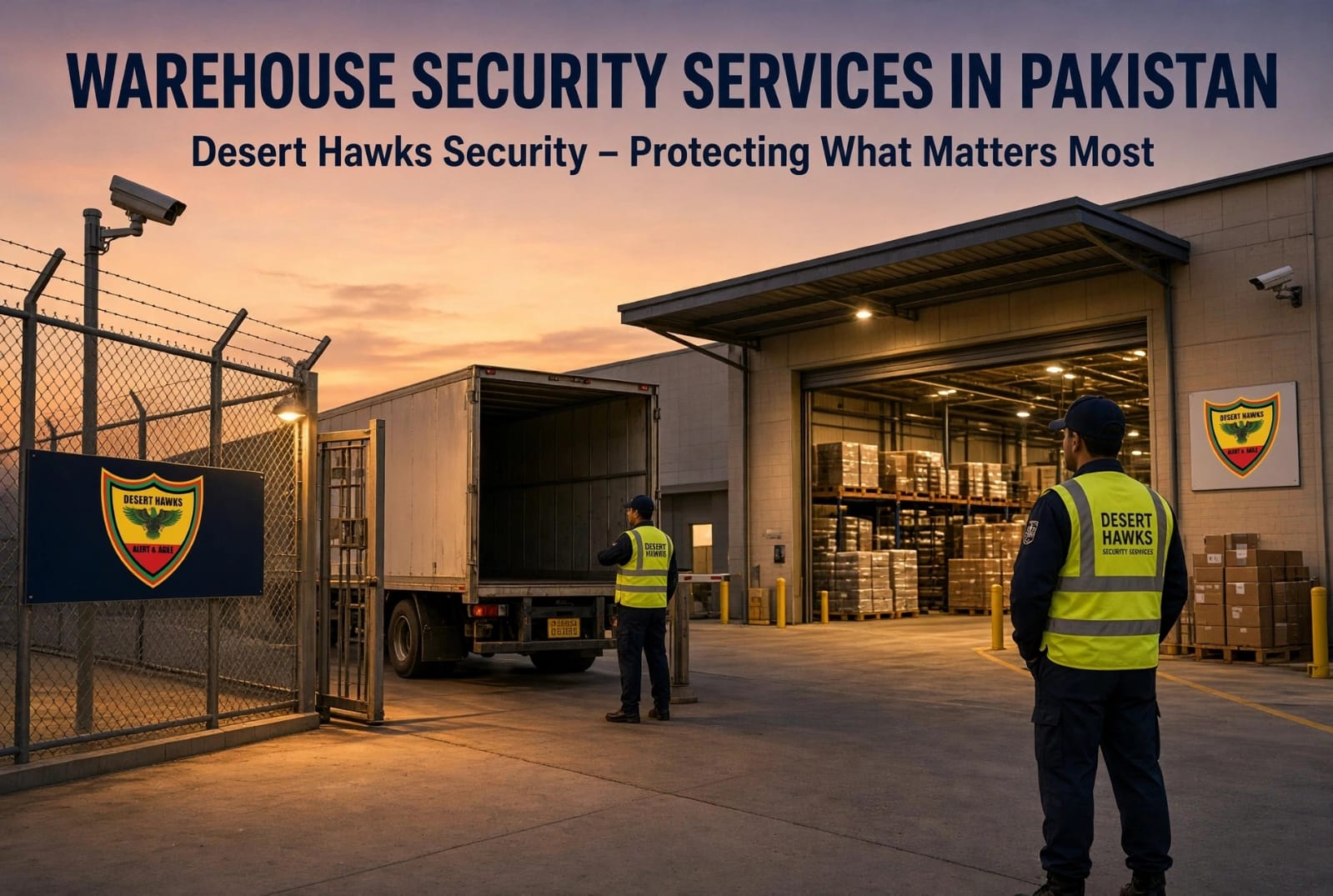
Warehouse Security Services in Pakistan: How to Protect Inventory, Staff and Operations
Warehouses are critical to the daily operations of many businesses. They store raw materials, finished products, equipment, documents, machinery, and other valuable assets. A security incident inside a warehouse can result in financial losses, damaged inventory, operational delays, and risks to employees.
For this reason, warehouse security services in Pakistan need to go beyond simply placing a guard at the main gate. Effective warehouse protection combines trained security personnel, controlled access, regular patrols, surveillance, proper reporting procedures, and security planning based on the specific risks of the facility.
Why Warehouse Security Is Important
Warehouses can contain large quantities of valuable inventory in one location. Depending on the business, this could include electronics, consumer goods, construction materials, pharmaceutical products, machinery, food products, or other high-value assets.
Security risks can come from different sources, including unauthorized entry, theft, vandalism, inventory discrepancies, trespassing, and poor access management.
Professional warehouse security can help organizations:
- Protect inventory and equipment
- Control who enters and leaves the facility
- Monitor loading and unloading areas
- Reduce unauthorized access
- Protect employees and visitors
- Identify suspicious activity
- Maintain visitor and vehicle records
- Respond quickly to security incidents
- Support business continuity
Common Security Risks in Warehouses
Every warehouse has different security requirements. The size of the facility, type of inventory, operating hours, number of employees, and surrounding environment can all affect the security plan.
Unauthorized Access
Warehouses may have multiple entrances, loading bays, employee doors, and emergency exits. Without proper access control, unauthorized individuals may enter restricted areas.
Security personnel can verify employees, visitors, contractors, and delivery personnel before allowing access.
Inventory Theft
Inventory can represent a significant investment for a business. Poorly controlled entry and exit procedures may make it difficult to identify missing items or determine how they left the facility.
Security guards can assist with vehicle checks, gate control, visitor records, and monitoring movement around storage areas.
Loading and Unloading Risks
Loading bays are often busy areas where employees, drivers, contractors, and vehicles interact. This can create security challenges if movements are not properly monitored.
A trained security team can help control vehicle entry, verify relevant documentation, monitor loading areas, and maintain records according to the organization’s procedures.
Boundary and Perimeter Security
Large warehouses may have extensive boundaries that require regular monitoring. Damaged fencing, poorly secured gates, inadequate lighting, or unmonitored areas can create vulnerabilities.
Regular patrols, security lighting, CCTV cameras, controlled gates, and trained security guards can work together to improve perimeter protection.
After-Hours Security
Many warehouses operate around the clock, while others remain closed during evenings, weekends, or holidays. During these periods, security arrangements become especially important.
Night security can include gate monitoring, scheduled patrols, CCTV observation, communication with supervisors, and established procedures for responding to incidents.
Key Elements of Effective Warehouse Security
A professional warehouse security plan should be based on the actual requirements and risks of the facility. Several security measures can work together to provide broader protection.
Trained Security Guards
Security guards provide a visible security presence and can monitor activity throughout the facility. Depending on the assignment, their responsibilities may include access control, visitor management, vehicle checking, patrols, incident reporting, and emergency response.
The number and positioning of security guards should be determined according to the size of the warehouse, number of access points, operating hours, and security requirements.
Access Control
Access control is an important part of warehouse protection. Businesses need to know who is entering the facility and whether they are authorized to access specific areas.
Access-control procedures can include:
- Employee identification
- Visitor verification
- ID checks
- Access cards
- Biometric systems
- Visitor registers
- Vehicle authorization
- Restricted-area controls
These measures can help organizations maintain better control over people entering and leaving their facilities.
CCTV Surveillance
CCTV surveillance provides additional visibility across warehouse premises. Cameras can be installed at entrances, loading bays, parking areas, storage sections, perimeter walls, and other important locations.
CCTV can help security personnel monitor activity and review incidents when necessary.
However, CCTV should not always be considered a replacement for trained security personnel. Combining surveillance technology with professional guards can provide both monitoring and on-site response.
Regular Security Patrols
Regular patrols can help security personnel identify unusual activity, damaged fencing, unlocked doors, suspicious vehicles, safety concerns, or other potential problems.
For larger warehouses, patrol schedules can be organized so that different areas are checked at appropriate intervals.
Patrol records can also provide management with useful information about the security condition of the facility.
Gate and Vehicle Security
Warehouse gates are an important security point because employees, delivery vehicles, contractors, and visitors may enter and leave throughout the day.
Security personnel may be responsible for checking:
- Employee vehicles
- Delivery trucks
- Contractors
- Visitors
- Vehicle authorization
- Entry and exit times
- Relevant delivery documentation
Clear procedures can help create more controlled movement of people and vehicles.
Security During Loading and Unloading
Loading and unloading operations require particular attention because they involve frequent movement of vehicles, drivers, contractors, employees, and products.
Security personnel can support these operations by controlling access to loading zones, verifying authorized personnel, monitoring vehicle movements, and reporting unusual activity.
Businesses should establish clear procedures so security staff, warehouse employees, drivers, and supervisors understand their respective responsibilities.
Proper monitoring of loading areas can also help organizations maintain better control over the movement of inventory.
Protecting Employees and Visitors
Warehouse security is not only about protecting products and equipment. Employees, contractors, delivery drivers, and visitors also need a safe and controlled environment.
Security teams can assist with access control, visitor management, emergency procedures, and communication during security incidents.
A well-organized security plan should identify important emergency exits, communication procedures, assembly areas, and escalation contacts where appropriate.
Security Risk Assessment for Warehouses
Before implementing or improving a security system, organizations should understand the specific risks associated with their warehouse.
A security assessment may examine:
- Number and location of entrances
- Boundary walls and fencing
- Lighting conditions
- CCTV coverage
- Loading areas
- Storage areas
- Employee access
- Visitor procedures
- Vehicle movement
- Emergency exits
- Existing security personnel
- Communication systems
- High-value or restricted areas
The results of a security assessment can help businesses identify vulnerabilities and determine where additional security measures may be required.
Combining Technology With Professional Security Guards
Modern warehouse protection can involve a combination of physical security and technology.
Depending on the facility, organizations may use:
- CCTV surveillance
- Access-control systems
- Biometric verification
- Alarm systems
- Security lighting
- Communication equipment
- Vehicle monitoring
- Remote monitoring
Technology can improve visibility, while trained security personnel can provide on-site monitoring, communication, access control, and response.
Combining different security measures can provide broader protection than relying on a single security method.
Choosing Warehouse Security Services in Pakistan
When selecting a security company, warehouse owners and managers should consider more than simply the number of guards provided.
Important factors include:
- Experience in providing security services
- Training and supervision of security personnel
- Understanding of site-specific requirements
- Access-control procedures
- Patrol and monitoring capabilities
- Incident reporting
- Communication procedures
- Emergency response planning
- Ability to provide suitable security staffing
- Regular supervision of security personnel
A professional security provider should understand the operational requirements of the warehouse and develop a security arrangement suited to the facility.
How Desert Hawks Supports Warehouse Security
Desert Hawks Security Services provides professional physical security solutions for businesses, organizations, industrial sites, warehouses, corporate offices, residential properties, and other environments requiring security protection.
Our security solutions can include trained security personnel, static guarding, access-control management, site security surveys, risk assessments, surveillance and monitoring, and emergency response planning.
For warehouse operators, security arrangements can be developed according to the requirements of the facility, including access points, operating hours, property layout, inventory, and specific security concerns.
The goal is to provide a structured security presence that helps businesses protect people, property, inventory, and daily operations.
Final Thoughts
Warehouse security is an important part of protecting inventory, employees, equipment, and business operations. A strong security plan combines trained people, clear procedures, appropriate technology, and continuous monitoring.
From access control and CCTV surveillance to trained security guards and regular patrols, each element can play an important role in creating a more controlled warehouse environment.
Businesses looking for warehouse security services in Pakistan should consider their facility’s specific risks, operating hours, access points, inventory, and security requirements before selecting a security solution.
With proper planning and professional security support, warehouses can establish stronger security controls while allowing their teams to focus on their daily operations.
Frequently Asked Questions About Warehouse Security
What Are Warehouse Security Services?
Warehouse security services include security guards, access control, patrols, CCTV monitoring, gate management, visitor management, vehicle checking, and other measures designed to protect warehouse facilities, people, inventory, and equipment.
Why Do Warehouses Need Security Guards?
Security guards can monitor entrances, control access, conduct patrols, manage visitors and vehicles, identify suspicious activity, and respond according to established security procedures.
How Can I Improve Security at My Warehouse?
Start with a security risk assessment. Review entrances, exits, perimeter protection, lighting, CCTV coverage, loading areas, access-control procedures, and current security staffing. The findings can then be used to develop a security plan suited to the facility.
Is CCTV Enough for Warehouse Security?
CCTV provides valuable surveillance, but it may not address every security requirement. Combining CCTV with trained security personnel, access control, patrols, and appropriate response procedures can provide broader protection.
Can Security Guards Monitor Warehouse Loading Areas?
Yes. Depending on the assignment, security personnel can monitor loading and unloading areas, control access, verify authorized vehicles and personnel, and report unusual activity.
How Does Desert Hawks Provide Warehouse Security?
Desert Hawks provides physical security solutions that can include trained guards, access-control management, site security surveys, risk assessments, surveillance and monitoring, and emergency response planning based on the requirements of the facility.


