
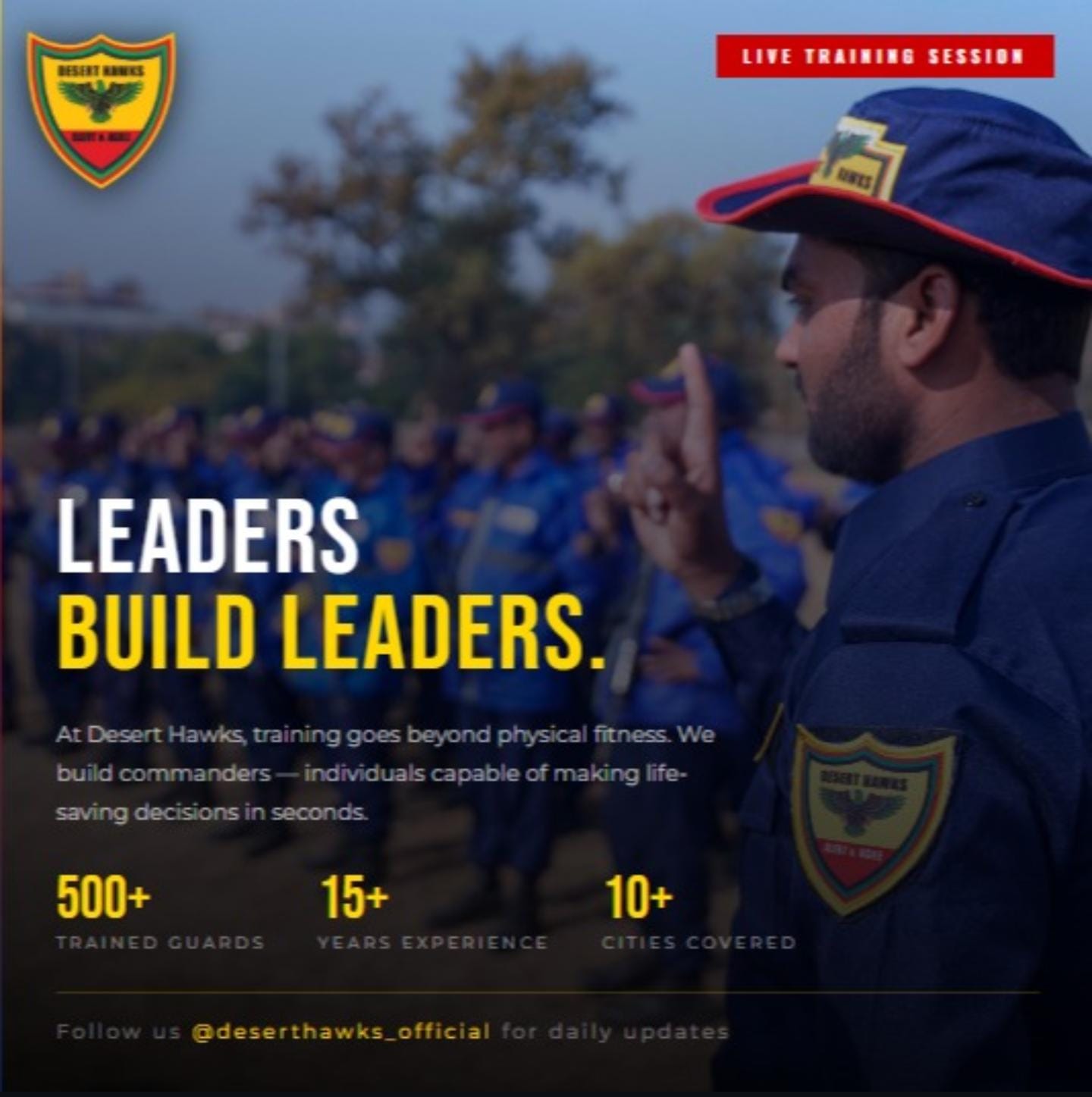
Security Guard Training in Pakistan: Skills Every Professional Guard Needs
Security is not simply about having a guard standing at an entrance. Professional security requires trained personnel who can observe their surroundings, identify potential risks, control access, communicate effectively, and respond appropriately to emergencies.
This is why security guard training in Pakistan is an important part of professional security operations.
Whether security personnel are deployed at a corporate office, residential community, educational institution, industrial facility, commercial property, event, or other location, proper training helps them understand their responsibilities and perform their duties professionally.
In this guide, we explain the importance of security guard training, the skills professional guards need, what training should include, and how businesses can choose a professional security company.
What Is Security Guard Training?
Security guard training is the process of preparing security personnel to perform their duties safely, professionally, and responsibly.
A professional training program may include:
- Access control
- Visitor management
- Security observation
- Patrolling
- Emergency response
- Incident reporting
- Communication
- Fire safety awareness
- First-aid awareness
- Conflict management
- Crowd management
- Professional conduct
- Site-specific security procedures
The exact training required depends on the security assignment, location, responsibilities, and potential risks.
For example, a guard working at a corporate office may have different responsibilities from a guard assigned to an industrial facility, residential community, event, or high-security location.
Why Is Security Guard Training Important?
Security personnel are often among the first people to notice unusual activity at a property.
A trained security guard understands that security is more than simply watching a gate. Guards need to understand normal activity at a location and recognize situations that may require attention.
Professional training can help security personnel develop the knowledge and practical skills required for their responsibilities.
1. Better Situational Awareness
Situational awareness is one of the most important skills for a professional security guard.
Security personnel need to observe their surroundings and identify activity that may be unusual for the environment.
This can include:
- Unusual visitors
- Suspicious behavior
- Unauthorized vehicles
- Unusual movement
- Open or unsecured doors
- Restricted-area access
- Potential safety hazards
- Changes in normal site activity
Good observation can help security personnel identify potential problems at an early stage.
2. Effective Access Control
Access control is a fundamental responsibility for many security guards.
Depending on the assignment, guards may be responsible for:
- Checking visitors
- Verifying identification
- Recording visitors
- Monitoring vehicles
- Controlling entry and exit points
- Managing restricted areas
- Following visitor procedures
- Reporting unauthorized access attempts
Proper training helps guards apply access-control procedures consistently.
A professional guard should understand who is authorized to enter a location, what verification procedures are required, and when an issue should be reported to a supervisor.
3. Emergency Response
Emergencies can occur without warning.
Security personnel may encounter situations involving:
- Fire
- Medical emergencies
- Accidents
- Unauthorized entry
- Security incidents
- Crowd-related problems
Security guard training helps personnel understand their responsibilities during an emergency.
Depending on the assignment, this may include:
- Alerting supervisors
- Contacting appropriate emergency services
- Supporting evacuation procedures
- Controlling access to affected areas
- Maintaining communication
- Recording important information
Security personnel should always operate within their training and assigned responsibilities.
4. Professional Communication
Communication is an essential part of security work.
Security guards regularly communicate with:
- Employees
- Visitors
- Supervisors
- Management
- Security teams
- Emergency responders
- Relevant authorities when required
Clear communication can help prevent confusion, particularly during an incident.
Professional training can teach guards how to communicate information accurately, remain respectful, and report important developments to supervisors.
5. Accurate Incident Reporting
Security work does not end when an incident is over.
Accurate incident reporting helps management understand what happened and determine whether additional security measures may be required.
A professional incident report may include:
- Date and time
- Location
- Description of the incident
- People involved
- Actions taken
- Relevant observations
- Notifications made
Reports should be factual, clear, and based on information actually observed or received.
6. Proper Patrolling
Patrolling is another important responsibility for many security personnel.
Depending on the site, guards may conduct scheduled or controlled patrols to identify potential security and safety issues.
A patrol may involve checking:
- Entry and exit points
- Perimeter areas
- Restricted areas
- Parking areas
- Doors and gates
- Emergency exits
- Designated security zones
Training helps guards understand how to conduct patrols properly and report anything unusual.
What Skills Should a Professional Security Guard Have?
Professional security personnel need more than physical presence.
They should develop a combination of practical, communication, observation, and professional skills.
1. Observation Skills
A guard should be able to remain alert and identify unusual activity in the surrounding environment.
2. Communication Skills
Security personnel need to communicate clearly with visitors, employees, supervisors, and other relevant parties.
3. Discipline and Professional Conduct
Punctuality, professional appearance, alertness, and following established procedures are important parts of professional security work.
4. Decision-Making Skills
Security personnel may need to determine when an issue should be handled according to established procedures and when it should be escalated to a supervisor or emergency service.
5. Physical Readiness
Depending on the assignment, guards may need to remain physically prepared to perform their duties for extended periods.
6. Reporting Skills
Security personnel should be able to document incidents and observations accurately and clearly.
7. Teamwork
Security operations often involve guards, supervisors, management, and other stakeholders working together.
What Does a Professional Security Guard Training Program Include?
A structured training program should combine theoretical knowledge with practical learning where appropriate.
1. Basic Security Procedures
Guards should understand their responsibilities, post orders, reporting structure, and site-specific procedures.
2. Access Control Training
Personnel should learn how to manage authorized and unauthorized access according to the client’s security requirements.
3. Security Observation
Training should help personnel understand what to observe and how to identify unusual conditions.
4. Emergency Procedures
Guards should understand appropriate procedures for common emergency situations and know how to communicate with supervisors and emergency services.
5. Communication Procedures
Security personnel should understand how to communicate information accurately and efficiently.
6. Incident Reporting
Guards should know how to record important information about security incidents and unusual events.
7. Fire and Safety Awareness
Security personnel should understand basic fire and workplace safety procedures relevant to their assignment.
8. Conflict Management
Security guards regularly interact with different people.
Training can help personnel manage difficult interactions professionally and avoid unnecessarily escalating situations.
9. Practical Security Training
Where appropriate, practical exercises can help security personnel understand how procedures should be applied in realistic situations.
Why Is Refresher Training Important?
Security training should not necessarily stop after initial recruitment or deployment.
Security procedures can change. Sites may introduce new equipment, access-control systems, emergency procedures, or operational requirements.
Refresher training can help reinforce important skills and keep personnel familiar with current procedures.
Refresher training may cover:
- Site security procedures
- Emergency response
- Communication
- Incident reporting
- Access control
- Safety awareness
- Professional conduct
- New security equipment
- Updated client requirements
Regular training can help maintain consistency across a security team.
Security Training Should Match the Assignment
Every security location has different requirements and potential risks.
1. Corporate Security
Corporate offices may require strong visitor management, access control, employee safety procedures, and professional front-desk security.
2. Residential Security
Residential communities may require:
- Visitor verification
- Vehicle monitoring
- Gate control
- Patrols
- Perimeter observation
- Incident reporting
3. Industrial Security
Industrial facilities may require additional attention to:
- Perimeter security
- Restricted areas
- Equipment
- Entry and exit points
- Emergency procedures
- Employee and visitor access
4. Event Security
Events can require:
- Entry control
- Crowd management
- Visitor screening
- Communication
- Emergency coordination
- Restricted-area protection
This is why security companies should understand the client’s environment before deploying security personnel.
The Role of Security Supervisors
Professional security operations require more than trained guards.
Supervision is also an important part of maintaining security standards.
Security supervisors can help ensure that guards:
- Report for duty on time
- Follow post orders
- Maintain professional appearance
- Perform assigned patrols
- Follow access-control procedures
- Record incidents correctly
- Communicate issues promptly
- Maintain discipline
- Follow client-specific requirements
Regular supervision can also help identify training gaps and operational problems.
Security Guards and Modern Security Technology
Modern security operations increasingly combine trained personnel with technology.
Depending on the location, security operations may involve:
- CCTV surveillance
- Access-control systems
- Alarm systems
- Communication equipment
- Visitor management systems
- Monitoring systems
- Security reporting systems
Technology can provide valuable information, but trained security personnel remain important for observation, communication, response, and following established procedures.
An effective security strategy can combine trained personnel, appropriate technology, clear procedures, and professional supervision.
How to Choose a Security Company With Trained Guards
Businesses and organizations should consider more than the number of guards a security company can provide.
Before selecting a security company, consider the following questions.
Does the Company Provide Security Training?
Ask about the company’s recruitment, training, and preparation process.
Are Security Guards Properly Supervised?
Understand how supervisors monitor deployed personnel and maintain professional standards.
Is Refresher Training Provided?
Ask whether security guards receive refresher training or assignment-specific training.
Does the Company Understand Your Security Requirements?
A professional security provider should understand the location, risks, working environment, and operational requirements before recommending a solution.
Does the Company Provide Incident Reporting?
Incident reporting and communication are important parts of professional security management.
Does the Company Use Appropriate Security Technology?
Depending on the assignment, CCTV, access control, monitoring systems, communication equipment, and other technologies may complement physical security.
Why Professional Training Makes a Difference
Security personnel often represent the first layer of protection at businesses, properties, events, and institutions.
When guards understand their responsibilities, they can perform their duties more consistently.
Professional training can help security personnel:
- Remain alert
- Follow established procedures
- Communicate effectively
- Identify unusual activity
- Respond appropriately
- Report incidents
- Work as part of a team
- Maintain professional conduct
However, training should be supported by proper supervision, site procedures, risk assessment, and appropriate security resources.
Security Guard Training at Desert Hawks Security Services
At Desert Hawks Security Services (Pvt.) Ltd., professional security is supported by trained personnel, structured procedures, supervision, and security solutions designed around client requirements.
Desert Hawks provides professional security services for businesses, residential properties, institutions, events, and other security assignments.
Our approach focuses on understanding the security requirements of each client and providing appropriate personnel and security solutions for the environment.
Professional security personnel can play an important role in:
- Access control
- Site protection
- Visitor management
- Security observation
- Patrolling
- Incident reporting
- Emergency response
- Maintaining security procedures
For organizations looking for professional security services, the right solution begins with understanding the risks of the location and selecting the appropriate combination of trained personnel, supervision, procedures, and technology.
Benefits of Working With a Professional Security Company
Working with a professional security provider can help organizations establish a structured security operation.
Potential benefits include:
- Trained security personnel
- Professional supervision
- Defined security procedures
- Site-specific security planning
- Incident reporting
- Emergency-response procedures
- Security monitoring
- Integration with security technology
- Ongoing operational support
The exact requirements depend on the nature of the assignment and the client’s security needs.
Frequently Asked Questions About Security Guard Training
What is security guard training?
Security guard training prepares personnel to perform responsibilities such as access control, observation, patrolling, communication, incident reporting, emergency response, and site-specific security procedures.
Why is security guard training important?
Training helps security personnel understand their responsibilities and follow established procedures during normal operations, unusual situations, and emergencies.
What skills should a security guard have?
Important skills can include observation, communication, discipline, situational awareness, incident reporting, teamwork, conflict management, and knowledge of site-specific procedures.
Do security guards need refresher training?
Refresher training can help reinforce existing procedures and introduce personnel to changes in technology, site requirements, safety procedures, and security protocols.
Is security training the same for every security guard?
No. Training should reflect the responsibilities, environment, and risks associated with a particular assignment.
Can trained security guards work with CCTV and access-control systems?
Yes. Security personnel may work alongside CCTV, access-control systems, alarms, communication equipment, and other security technologies depending on the requirements of their assignment.
How can I hire trained security guards in Pakistan?
Organizations can contact a professional security company and discuss their location, security requirements, number of guards, working hours, risks, and operational needs. The security provider can then recommend an appropriate security arrangement.
Conclusion
Professional security requires more than a uniform and a physical presence.
Security guard training in Pakistan helps personnel develop the knowledge and practical skills needed to observe their surroundings, control access, communicate effectively, report incidents, and respond appropriately to emergencies.
Training should be supported by proper supervision, clear procedures, site-specific requirements, and appropriate security technology.
For businesses, organizations, residential properties, events, and institutions, trained and professionally managed security personnel can form an important part of a structured security operation.
If your organization needs professional security personnel or a customized security solution, Desert Hawks Security Services (Pvt.) Ltd. can help you discuss your requirements and identify an appropriate security approach.
Contact Desert Hawks Security Services today to discuss your security requirements.


